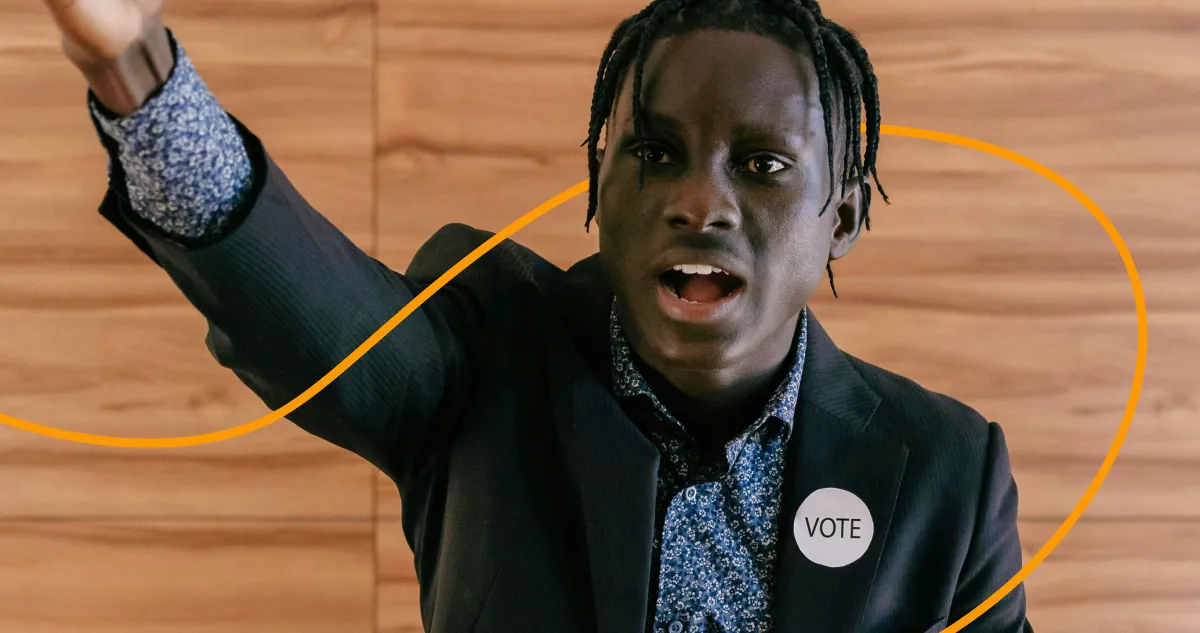
Freedom Day should not only commemorate the past. It should ask how democracy is being practiced today, especially by youth who inherit freedom but must now sustain and deepen it.
Freedom Day and the Work of Democracy
How does democracy in South Africa survive through Youth Participation? Elections open the door to democracy, but participation keeps it alive. Participation, Transparency, Accountability, and Informed Civic Engagement are what the youth demand from the government. Freedom Day should also compel us to ask difficult but necessary questions:
- What does freedom look like today?
- Who feels included in our democracy, and who remains unheard?
- How do we ensure that young people see democracy as a space for opportunity rather than disappointment?
For a generation born into constitutional freedom but confronted by inequality, unemployment, and growing political frustration, these questions are especially urgent. If democracy is to remain meaningful, it must be more than a date on the calendar.
Participation, Transparency, Accountability, and Informed Civic Engagement are what the youth demand from the government.
So why does this matter?
Freedom Day remains one of the most significant dates on South Africa’s democratic calendar. It commemorates 27 April 1994, when millions of South Africans voted in the country’s first democratic election. It was a historic moment that marked the formal end of apartheid and the beginning of a new constitutional order built on dignity, equality, and inclusion.
More than three decades later, Freedom Day continues to carry deep symbolic importance. It reminds us of the sacrifices made for political liberation and the hard-won right of every citizen to vote. Yet, Freedom Day should also be a moment of reflection. Democracy, in the context of South Africa, must be practiced, protected, and renewed in the present.
More than three decades later, many young South Africans stand in different queues: those for jobs, for water, for opportunity.
In this regard, youth engagement has become one of the most important questions facing the country today. More than three decades later, many young South Africans stand in different queues: those for jobs, for water, for opportunity.
Community-based workshops at work
Four ParliMeter civil society workshops took place in September 2025 and March 2026 in the Western Cape and Gauteng. Co-funded by the European Union, the Organisation Undoing Tax Abuse (OUTA), along with its partners the Parliamentary Monitoring Group (PMG) and OpenUp, has been developing ParliMeter since 2024 to improve parliamentary oversight. This digital platform tracks parliamentary activities and boosts citizens’ active participation by tracking the proceedings of Parliament. The participants at both workshops revealed that many young people should be at the forefront of democracy. The workshops revealed that one of the clearest ways to strengthen democracy is through civic education and public engagement. Community workshops and youth-focused initiatives across the country continue to show that when people are given practical knowledge about how institutions work, they are far more likely to participate confidently. When young people understand how oversight works, how to raise concerns, or how decisions are made, democracy becomes more tangible and relevant.
The workshops revealed that one of the clearest ways to strengthen democracy is through civic education and public engagement.
However, youth frustration deepens, as many young people expressed their concerns during the workshops. The youth feel that the lack of opportunities post-high school, the high unemployment rate and lack of funding hinder their ability to be active participants. This frustration must not be mistaken for apathy. Many young people care deeply about justice, accountability, and the future of South Africa. What often exists is not a lack of interest, but a lack of meaningful pathways for participation. Young people want to be heard, to contribute, and to see that their voices can make a difference.
Phrases like “our government fails us as a youth; we don't have jobs, and their services are very poor. We are struggling to get water as well as electricity” were common responses received from the workshops. Another said, “I'm a law student. I am interested in seeing the young people's voices being heard and making a difference. If parliament [must] start acting in the interests of the young people and support community empowerment initiatives”.
Phrases like “our government fails us as a youth; we don't have jobs, and their services are very poor. We are struggling to get water as well as electricity” were common responses received from the workshops.
Freedom Day, therefore, carries a responsibility. It is not only a day to remember where South Africa has come from, but also to consider where it is going. The values of freedom, equality, and participation must be continuously translated into lived realities. This means investing in quality education, creating opportunities for youth leadership, strengthening civic literacy, and ensuring institutions remain open and accountable to the public.
ParliMeter as a tool for freedom & empowerment
ParliMeter serves as a valuable tool for youth empowerment by making parliamentary processes more accessible, understandable, and relevant to young South Africans. Many young people feel disconnected from formal politics because institutions often appear distant or overly complex. By simplifying information on parliamentary oversight, public participation, and the responsibilities of elected representatives, ParliMeter helps bridge this gap between youth and democratic institutions. It equips young citizens with the knowledge needed to ask informed questions, monitor government performance, and engage meaningfully in issues that affect their communities. In doing so, ParliMeter transforms young people from passive observers into active participants, fostering a generation that is more politically aware, confident, and committed to strengthening democracy.
By simplifying information on parliamentary oversight, public participation, and the responsibilities of elected representatives, ParliMeter helps bridge this gap between youth and democratic institutions.
Our March 2026 workshop data revealed that ParliMeter’s tagline, “Access, Accountability, Action”, " remains steadfast as the guiding principles and pillars which strive for a healthy democracy. One participant shared the following: "I am very likely to use digital tools such as ParliMeter to follow and engage with Parliament. Digital tools make it easier to access information, stay updated on parliamentary activities, and understand what decisions are being made. They also help ordinary citizens to participate and hold leaders accountable. Using platforms like ParliMeter would help me stay informed, especially when I cannot attend meetings in person. It will also support me in sharing correct information with my community and encouraging others to become more involved." It is against this backdrop that ParliMeter has proven its commitment to increasing citizen participation with democracy and parliament, especially among the youth.
Democracy cannot be celebrated once a year and neglected for the rest of it.
Democracy cannot be celebrated once a year and neglected for the rest of it. It requires participation in everyday life. It requires citizens who ask questions, seek information, challenge injustice, and contribute to solutions. It also requires institutions willing to listen and adapt.
Freedom Day & final thoughts
Parliament plays a central role in democratic oversight. It is where laws are debated, public concerns should be represented, and the executive is meant to be held accountable. Yet many citizens, especially younger people, often feel disconnected from parliamentary processes. Institutions can appear distant, technical, or inaccessible. When this gap grows, democracy weakens. On this Freedom Day, we should also ask whether young people are sufficiently empowered to participate in democracy beyond the ballot box, not only by celebrating the right to vote but also by engaging public representatives, participating in community issues, understanding how institutions function, and holding leaders accountable.
On this Freedom Day, we should also ask whether young people are sufficiently empowered to participate in democracy beyond the ballot box...
Youth engagement also matters because young people bring energy, innovation, and urgency to public life. They are often at the forefront of conversations about social justice, education, gender equality, corruption, climate change, and economic reform. They use digital platforms creatively, organise collectively, and challenge outdated ways of thinking. In many ways, they are already reshaping democratic participation in new and important forms.
As South Africa moves from Freedom Day toward Youth Day in the coming weeks, the connection between these two commemorations becomes especially significant. Freedom Day celebrates the democratic rights secured in 1994, while Youth Day honours the courage of young people in 1976 who stood at the forefront of resistance against injustice. Together, they remind us that the struggle for freedom has always depended on the energy, sacrifice, and leadership of younger generations. Today, that responsibility continues in a different form, not through protest alone, but through informed participation, civic engagement, and shaping institutions that serve the public. In this sense, the road from Freedom Day to Youth Day is a reminder that democracy must continually be renewed by the voices of the youth.
.png)
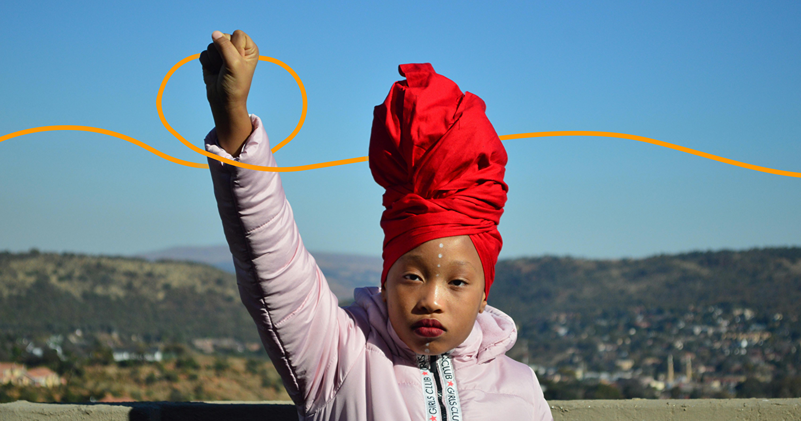
.jpeg)


Work with us
We are looking for resource and data partners!
If you or your organisation would like to contribute or collaborate, please get in touch.
You might also like
What we’ve Learnt From A Year of Tracking Ethics in Parliament
IDP Target 7: Representative Parliament: South Africa looks inclusive, but does representation translate into influence?
.webp)