Women’s Month 2026: Are South Africa’s democratic institutions delivering on gender equality?
.png)

ParliMeter is a parliamentary information, accountability and transparency platform that advocates for improved quality and access to parliamentary data.
ParliMeter data allows us to analyse how Parliament approaches and integrates women’s representation, oversight and the progress towards achieving a gender-responsive democracy.
August is Women’s Month in South Africa, a time when the country reflects on the struggle for gender equality and the continued work required to build a society where women participate fully and equally in all areas of life. The women’s march remains one of South Africa’s most powerful examples of citizens demanding accountability from those in power.
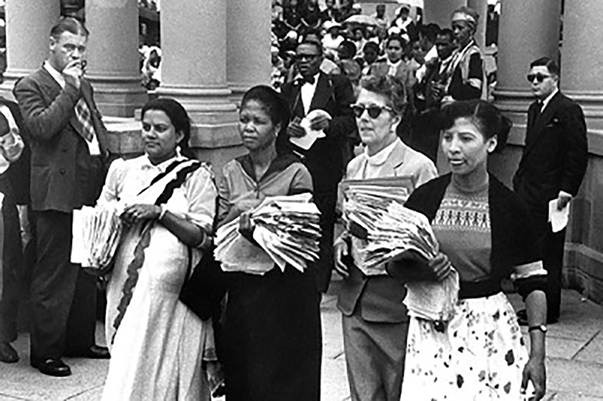
Despite restrictions based on gender and race, South African women have for generations participated in the socio-political and economic life of the country, contributing to the establishment of South Africa’s democratic order. Almost 70 years later, a question remains: how effectively do South Africa’s democratic institutions respond to the needs and priorities of women, whose interests and experiences have historically been marginalised in political decision-making?
Representation is an important measure of progress, but it is only one part of the picture. The focus on a gender-responsive democracy is not based on the idea that democracy should serve only women or that men are excluded from gender discussions. Rather, it recognises that society is made up of people with different experiences, opportunities, vulnerabilities and needs, and that democratic institutions must understand and respond to these differences if they are to serve everyone effectively.
A gender-responsive democracy asks a fundamental question: do public institutions recognise how policies, decisions and systems affect people differently based on gender? The importance of gender responsiveness lies in improving the quality of democracy itself. When institutions consider the different realities faced by society, they are better able to develop policies that respond to society as a whole. A gender-responsive democracy therefore asks not only “who is represented?” but also “whose experiences are considered when decisions are made?”
A gender-responsive democracy requires more than women occupying positions of political power. It requires institutions that listen, ask difficult questions, monitor implementation and hold the government accountable for improving lives, including women’s.
Using ParliMeter data, we reviewed women’s representation, gender-related parliamentary questions and gender-focused committee oversight to examine how gender features within South Africa’s national legislature.
Women’s representation in Parliament: Progress, but not parity
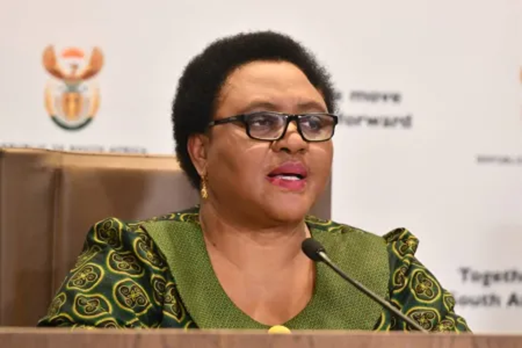
South Africa is often recognised internationally for having relatively high levels of women’s political representation. Since 1994, women’s participation in Parliament has increased significantly, reflecting the democratic commitment to building institutions that are more representative of society.
Current parliamentary data indicates that women constitute a significant proportion of representation in South Africa’s Parliament. In the National Assembly (NA), there are 177 female Members of Parliament (MPs) compared with 218 male MPs, meaning that women represent approximately 45% of the NA membership.
In the National Council of Provinces (NCOP), women account for 20 members, compared with 33 male members, representing approximately 38% of the Council’s total membership.
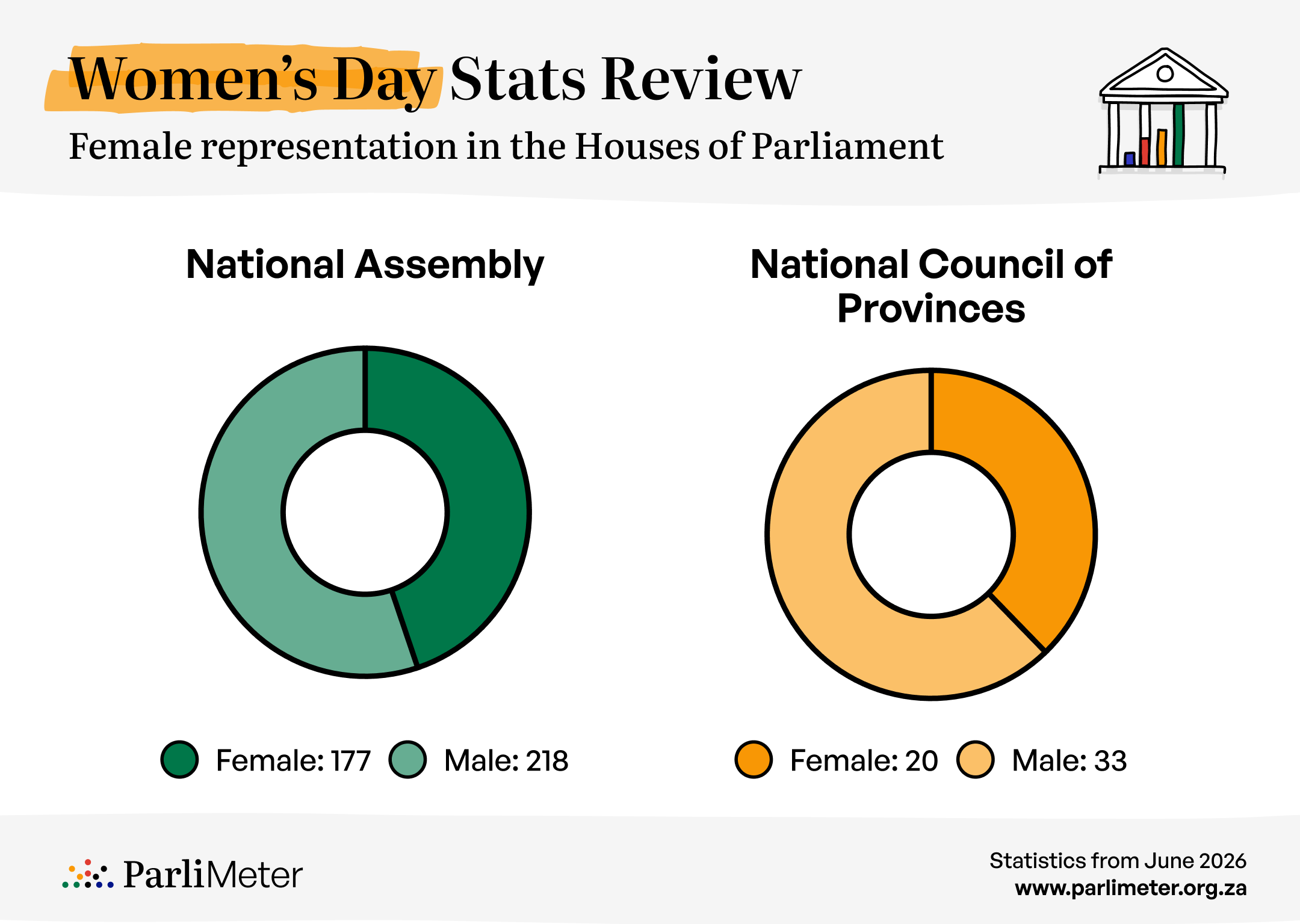
These figures demonstrate important progress, but they also show that equal representation has not yet been achieved. Political decisions are not made in a vacuum; they affect people’s daily lives. The inclusion of women in political institutions can broaden the range of issues considered and ensure that previously overlooked concerns receive attention. A democracy is built on the principle that all people should have an equal voice in shaping the decisions that affect their lives. While democracy is often measured by whether people can vote and participate politically, a deeper measure of democratic health is whether different groups within society are meaningfully represented and whether institutions respond to their experience.
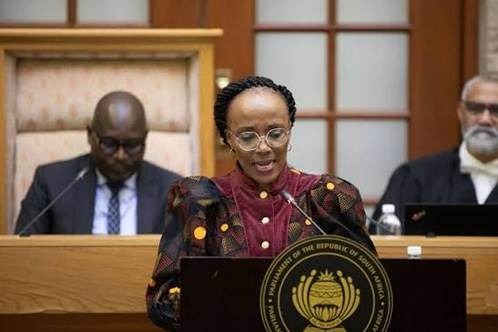
Women’s leadership in South Africa’s Parliament is increasingly visible — not only in numbers, but in the positions where decisions are shaped, and accountability is exercised. The presence of women in the highest parliamentary offices, including the Speaker of the NA and Chairperson of the NCOP, marks important progress in advancing women’s political leadership.
This progress is also reflected in parliamentary committee leadership. Women chair or co-chair 26 of 56 committees, accounting for 46.4% of committee leadership positions. These are the spaces where legislation is examined, government departments are held accountable, and key policy debates take place.
The significance of this representation goes beyond statistics. Leadership roles give women the opportunity to influence parliamentary agendas, shape oversight priorities, and bring diverse perspectives into decisions that affect the country.
Globally, women continue to be underrepresented in political decision-making spaces. According to the Inter-Parliamentary Union (IPU), women’s representation in national parliaments has increased steadily over time, but global progress remains uneven. The IPU’s Women in Parliament reports consistently show that women remain a minority in many legislatures, particularly in leadership positions and key decision-making roles.
The United Nations has similarly recognised women’s political participation as a fundamental component of inclusive governance. Sustainable Development Goal 5 calls for women’s full and effective participation and equal opportunities for leadership at all levels of decision-making.
However, representation alone does not guarantee transformation. The impact of women’s participation must also be measured by whether gender issues influence parliamentary priorities and whether government is held accountable for delivering change.
Parliament’s priorities: Gender cannot be the responsibility of one committee alone
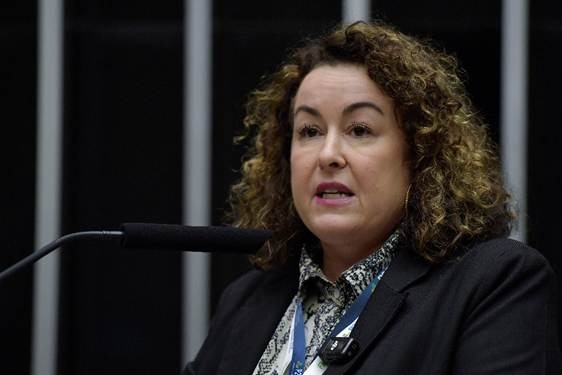
Parliament’s committees are where much of the detailed oversight and legislative work takes place. Committees examine government performance, question Ministers and monitor whether departments are implementing policies effectively.
ParliMeter’s review of parliamentary agenda items between February 2025 and July 2026 shows that gender-related discussions were concentrated within specific committees.
The Portfolio Committee on Women, Youth and Persons with Disabilities recorded the highest number of gender-related agenda items, with six items considered during the period reviewed. The Social Development Committee followed with four items, while Higher Education and Basic Education each recorded three. Other committees, including Police, Employment and Labour, Cooperative Governance and Traditional Affairs, Health and Human Settlements, considered fewer gender-related matters.
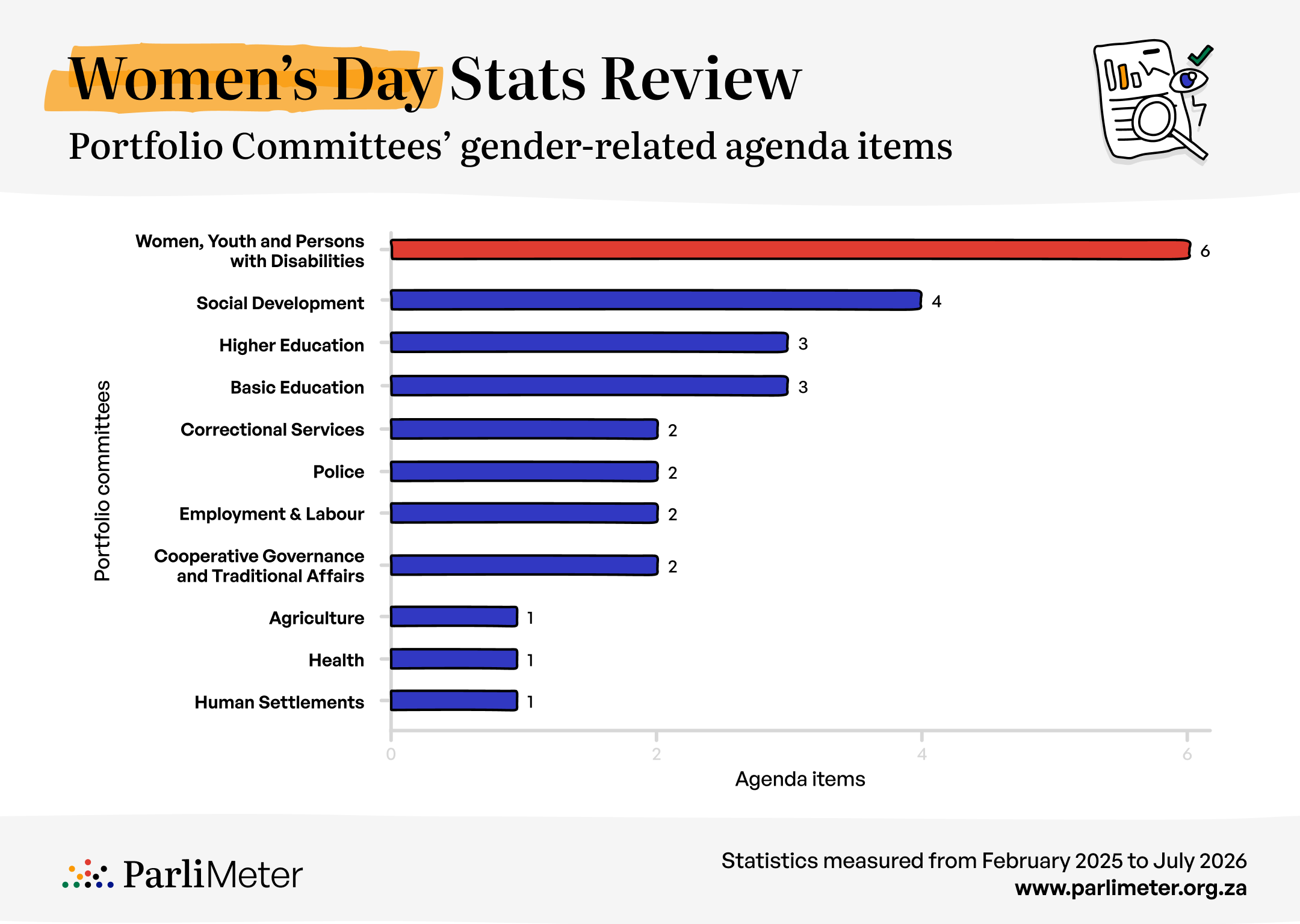
The pattern of parliamentary oversight shows an important challenge: while some committees have a direct responsibility for gender-related matters, gender equality is not a standalone issue that can be addressed only through a dedicated gender committee. Women’s experiences are shaped by almost every area of government policy, including employment, education, healthcare, policing, housing, agriculture, economic development and local government. As a result, every parliamentary committee has a role to play in understanding how its decisions affect women and whether government programmes are responding effectively to gender inequalities.
Taking this kind of broad cross-cutting approach is known internationally as gender mainstreaming. The United Nations defines gender mainstreaming as the process of assessing the implications for women and men of any planned action, including legislation, policies and programmes, across all areas and levels of government. Rather than treating gender equality as a separate policy area, gender mainstreaming requires governments to integrate gender considerations into all stages of policymaking, implementation and evaluation.
The importance of gender mainstreaming lies in recognising that policies that appear gender-neutral may affect women and men differently because of existing social and economic inequalities. A decision that does not explicitly consider gender may unintentionally reinforce existing barriers.
For example, economic policy is often presented as gender-neutral, but women and men do not participate in the economy on equal terms. Women continue to experience barriers relating to employment opportunities, pay equality, access to finance and participation in leadership positions. This means that parliamentary committees responsible for finance, trade, economic development and employment should not only examine overall economic performance but also ask whether economic policies are improving opportunities for women. It is also worth noting that the many portfolio committees in parliament are chaired by men, furthering the point that without adequate representation and capacitation, gender issues may not be brought to the fore and addressed.
Similarly, education policy has important gender dimensions. While South Africa has made significant progress in improving girls’ access to education, challenges remain around school safety, teenage pregnancy, gender-based violence and barriers that affect girls’ ability to complete their education, such as period poverty and inadequate access to menstrual health support. These issues demonstrate why gender considerations cannot be limited to committees dealing specifically with women’s affairs. The Basic Education Committee, for example, plays an important role in examining whether education policies address the different challenges faced by girls and boys.
Using the tools of Parliament: Are parliamentary questions being used effectively in advancing women’s issues?
One of Parliament’s most important accountability tools is the ability of MPs to ask Ministers questions. Between February 2025 and July 2026, Parliament recorded 83 gender-related questions directed to Ministers.
The largest number of questions were directed to the Minister of Police, with 15 questions. This reflects ongoing national concern around gender-based violence, women’s safety and the criminal justice system’s response. The Minister of Women, Youth and Persons with Disabilities received 11 questions, while the Ministers of Justice and Constitutional Development and Social Development each received 10 questions. Questions were also directed to the Ministers responsible for Health, Basic Education, and Sport, Arts and Culture.
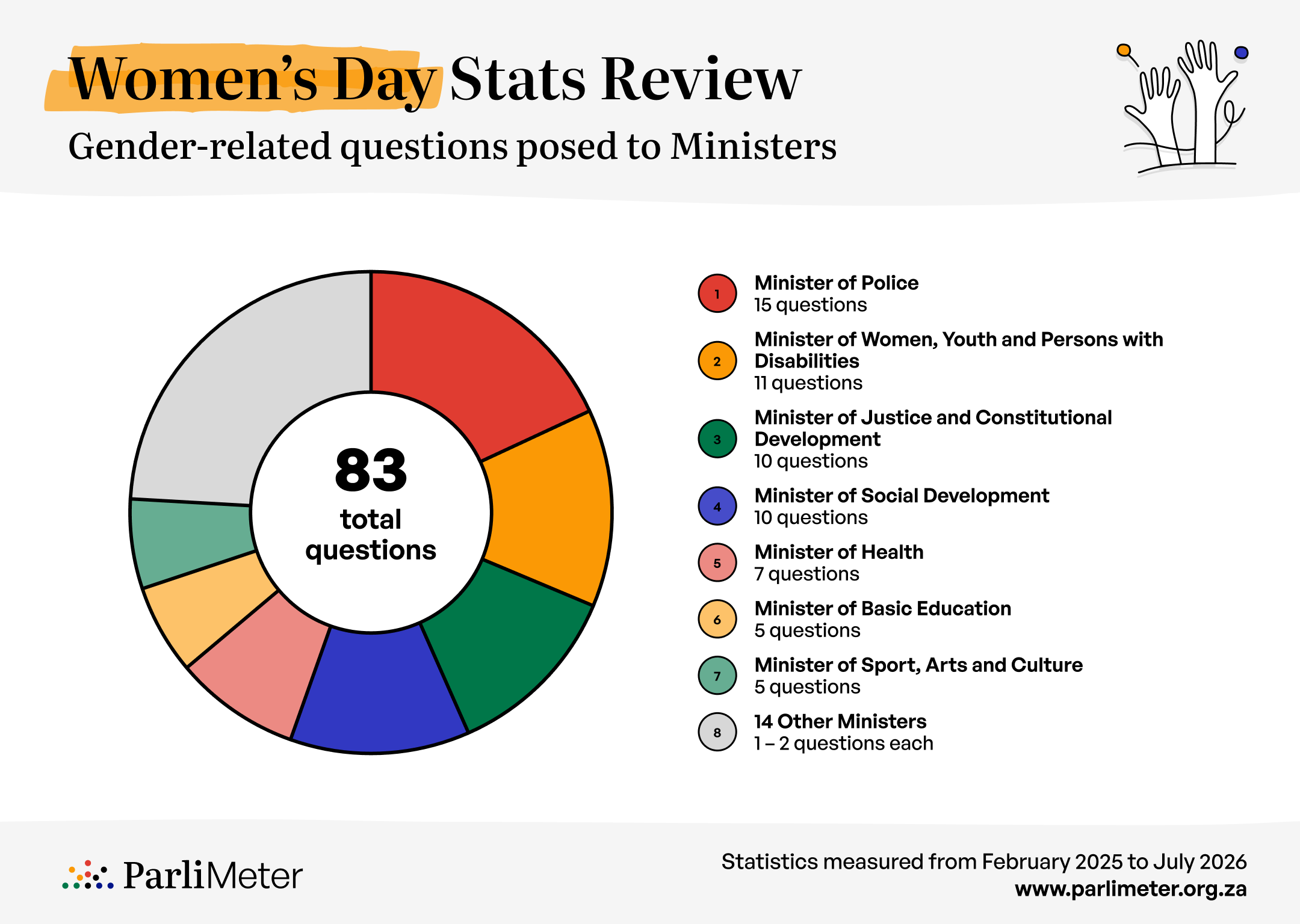
The focus on policing, justice and social development within parliamentary oversight reflects the reality that gender inequality is interconnected and cannot be addressed through a single government department or intervention. Violence against women is not only a criminal justice issue; it is also shaped by broader social, economic and institutional conditions that influence women’s vulnerability, access to support and ability to seek justice. While a police response is essential, women who experience violence must have confidence that law enforcement institutions will respond effectively, investigations will be conducted properly, and perpetrators will be held accountable. Policing alone addresses only the consequences of violence after it has occurred. Preventing violence requires addressing the underlying conditions that enable it, including harmful social norms, economic dependency, inequality and limited access to support services.
South Africa’s experience reflects a global recognition that gender-based violence is a complex social challenge requiring coordinated responses across multiple sectors. The United Nations has identified violence against women as a global human rights challenge, emphasising that effective prevention requires action across legal, social, educational, health and economic systems.
South Africa’s own National Strategic Plan on Gender-Based Violence and Femicide (2020–2030) reflects this understanding by adopting a multi-sectoral approach involving government, civil society, communities and survivors. This has important implications for parliamentary oversight. If gender-based violence is understood as a cross-cutting issue, then accountability cannot sit only with the committees overseeing police or women’s issues. Committees responsible for justice, health, education, employment, social development, finance and cooperative government all have a role in examining whether government responses are adequately addressing the factors that contribute to inequality and violence. GBV is one example of the importance of understanding how different socio-political issues affect different sectors of society in an intersectional manner.
For Parliament, the challenge is therefore not only to ask whether departments are implementing their individual programmes, but whether government as a whole is working together effectively to address a complex societal problem.
Women’s Month reminder: representation must lead to results
South Africa has made significant progress in increasing women’s political participation. Women are present in substantial numbers within Parliament, and gender issues continue to feature in oversight processes.
However, Women’s Month also provides an opportunity to reflect on what remains unfinished.
A truly gender-responsive democracy requires more than women’s presence in institutions. It requires those institutions to actively respond to women’s experiences and hold government accountable for delivering equality in practice.
The women who marched in 1956 demanded that their voices be heard. Today, that same principle remains central to democracy: citizens must be able to see whether institutions are listening, responding and delivering.
As South Africa celebrates Women’s Month, we are reminded that progress should not only be measured by who sits in positions of power, but by whether those institutions are using their power to improve people’s lives.
.png)


Work with us
We are looking for resource and data partners!
If you or your organisation would like to contribute or collaborate, please get in touch.
You might also like
A CSO perspective on the Indicators for Democratic Parliament in a Southern African Context
From parliamentary data to public action: ParliMeter enters its next chapter